From Curiosity to Climate-Tech: Dhruv’s Journey
Published on: March 2026
The ambition to create something meaningful did not emerge suddenly. It was always present, quietly developing until the right opportunity surfaced. That moment came in Grade 10, when Hill Spring introduced students to a startup competition. Learning shifted from theory to application, encouraging students to think critically, collaborate, and translate ideas into structured business plans. For Dhruv, this marked a turning point. “That experience made me realise I enjoyed building things from scratch,” he recalls. “It wasn’t just about ideas anymore it was about execution and problem-solving.” As Dhruv progressed beyond Hill Spring, this curiosity continued to evolve. After graduating, he pursued a BSc in Biotechnology at the Hong Kong University of Science and Technology (HKUST), where his interest in science deepened alongside an emerging inclination toward entrepreneurship. “Biotechnology taught me how closely science and impact are connected,” he shares. “I began seeing how research could translate into real-world solutions.”
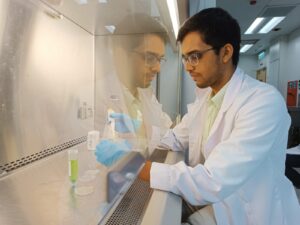
Having grown up in India, Dhruv had lived with asthma from a young age, initially viewing it as a personal health challenge. It was only after moving to the United States for his master’s degree at Carnegie Mellon University that a broader contrast became clear. The difference wasn’t limited to healthcare or lifestyle, but extended to the environment itself. Western cities seamlessly integrate greenery into everyday urban and workspaces, while many Indian cities remain densely built with limited access to natural elements even within premium offices.
“I started noticing how differently I felt in spaces that had access to nature,” he says. “It made me question why that experience wasn’t more common back home.”
This observation became the foundation of Algreen.
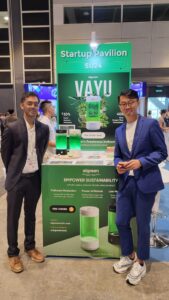

“For us, credibility matters,” Dhruv explains. “If it isn’t scientifically sound, it doesn’t serve its purpose.”
Reflecting on his journey, Dhruv shares advice that closely mirrors Hillspring’s ethos. While academic performance has its place, he believes some of the most valuable learning comes from observing the world closely.
“Everyday problems are everywhere,” he says. “When you stay curious, they naturally turn into ideas especially today, when technology and AI make innovation far more accessible.”
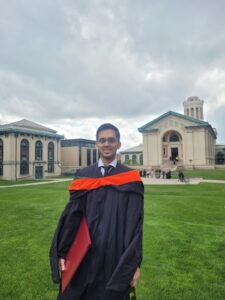
If Dhruv could speak to his younger self, his message would be simple: speak up. Ideas often come early, but confidence takes time. Learning to communicate to ask questions, express thoughts, and engage openly is essential.
“Most ideas don’t arrive fully formed,” he reflects. “They become clearer once you start talking about them.”
Sometimes, the biggest step forward isn’t having an idea it’s having the courage to say it out loud.
Share


